Tajmahal Tour


Early morning drive to Agra


Agra is famous as being home to one of the Seven Wonders of the world-the Taj Mahal.
The architectural splendour of the mausoleums, the fort and the palaces is vivid reminder of the opulence of the legendary Mughal empire, of which Agra was the capital in the 16th and early 17th centuries. While its significance as a political center ended with the transfer of the capital to Delhi in 1634 by Shah Jahan, its architectural wealth has secured its place on the international map. A pleasant town with a comparatively slow pace, Agra is known for its superb inlay work on marble and soapstone by craftsmen who are descendants of those who worked under the Mughals. The city is also famous for its carpets, gold thread embroidery and leather shoes.


On arrival proceed for sightseeing of Taj Mahal


Taj Mahal of India - "the epitome of love", "a monument of immeasurable beauty". The beauty of this magnificent monument is such that it is beyond the scope of words. The thoughts that come into the mind while watching the Taj Mahal of Agra is not just its phenomenal beauty, but the immense love which was the reason behind its construction. Mughal Emperor Shah Jahan got this monument constructed in the memory of his beloved wife Mumtaz Mahal, with whom he fell in love at the first sight. The very first sight of the Taj Mahal, the epitome of love and romance leaves one mesmerized. Standing majestically on the banks of River Yamuna, the Taj Mahal is synonymous with love and romance. It is believed that the name "Taj Mahal" was derived from the name of Shah Jahan wife Mumtaz Mahal and means "Crown Palace". The purity of the white marble, the exquisite ornamentation, precious gemstones used and its picturesque location. 


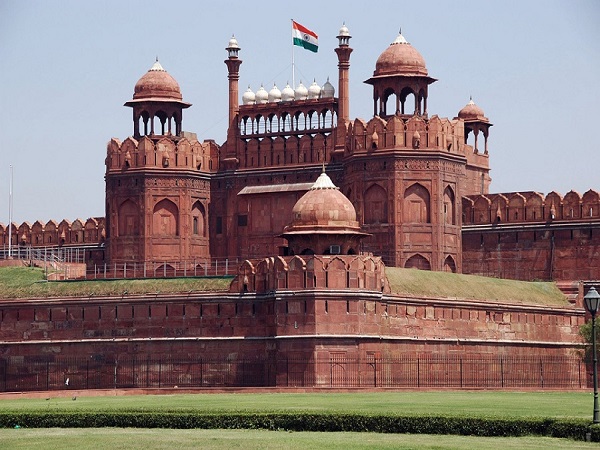
Agra Fort, his great monument of red sandstone dominating a bend in the river Yamuna, 2km northwest of Taj Mahal was constructed by the Mughals during 1565-1571. It was Emperor Akbar who laid the foundation of this majestic citadel in 1565. The fort was ready by 1571 period of Shahjahan, Akbar's grandson. The fort is crescent shaped, flattened on the east with a long, nearly straight wall facing the river. Fort's colossal double walls rise 69 ft in height and measure 2.5 km in circumference encircled by a moat and contain a maze of buildings which form a small city within a city. The fort contains splendid mosques and palaces in red sandstone and white marble built by two generations of creative builders during the time of Akbar and later Jehangir and Shahjahan.


Later drive back to Delhi.